4 Beautiful Frog Species for the Aquarium
Aquarium frogs are amphibians adapted to life in an artificially created aquatic environment. Some species that are now bred in captivity are also found in nature, but others were obtained as a result of selective breeding.
-e1609620943601.jpg "Behavior of aquarium frogs")
These pets often require special conditions and cannot always live in the same aquarium with fish and shellfish. In addition, they need an island of land where they can take a break from the aquatic environment.
Contents
Behavioral characteristics of pets
Frogs are among the most ancient species of amphibians, appearing on the planet long before dinosaurs, so watching them is no less interesting than colorful aquarium fish.
These creatures are not primitive. They have a good memory and are able to remember the faces of their owners and even treat people differently. Frogs and toads, if given food on a schedule, will approach the place where they can get food at the right time.
Species affiliation influences the behavior of these animals. Large frogs are often aggressive, digging through and tearing up algae, moving decor, etc.
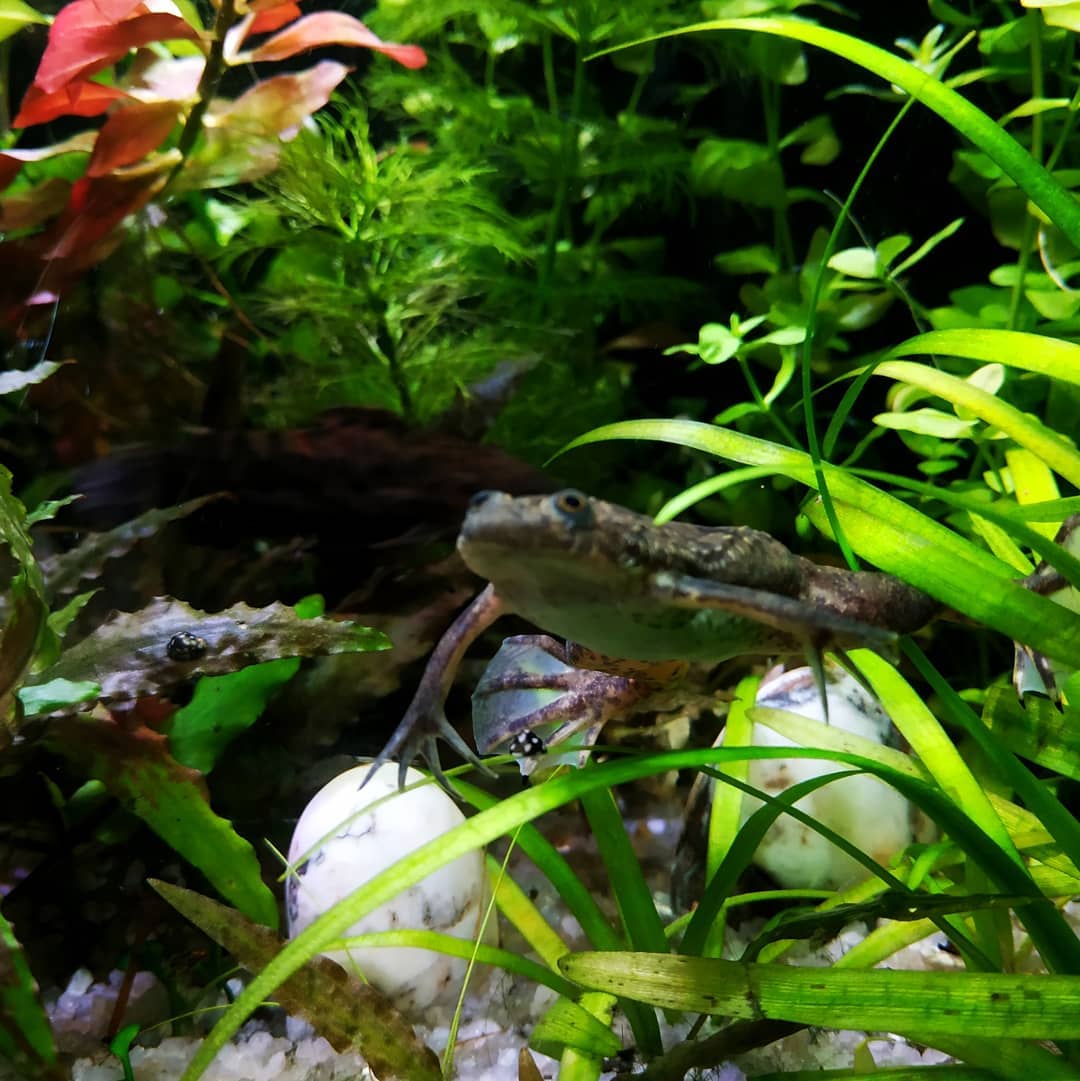 Such individuals have difficulty getting along with fish and other inhabitants of the aquarium, and may even perceive their “neighbors” as food. It is better to keep them in a separate aquaterrarium only with their relatives.
Dwarf species have a more docile character. They rarely damage decor and plants and pollute their habitat less intensively.
These creatures are slow, so they can often be seen sitting on the bottom of an aquarium or on a piece of land. Attempts to hide in dense thickets of aquatic plants are the norm for them.
Some pet frogs can make quite loud noises, more often at night. This happens not only during the breeding season.
With the help of piercing sounds, individuals living in the tank maintain social contacts.
Life expectancy of frogs in the house
At home, amphibians live much longer than in the wild. Thus, large varieties, when provided with the necessary environment, can please owners for 12-15 years.
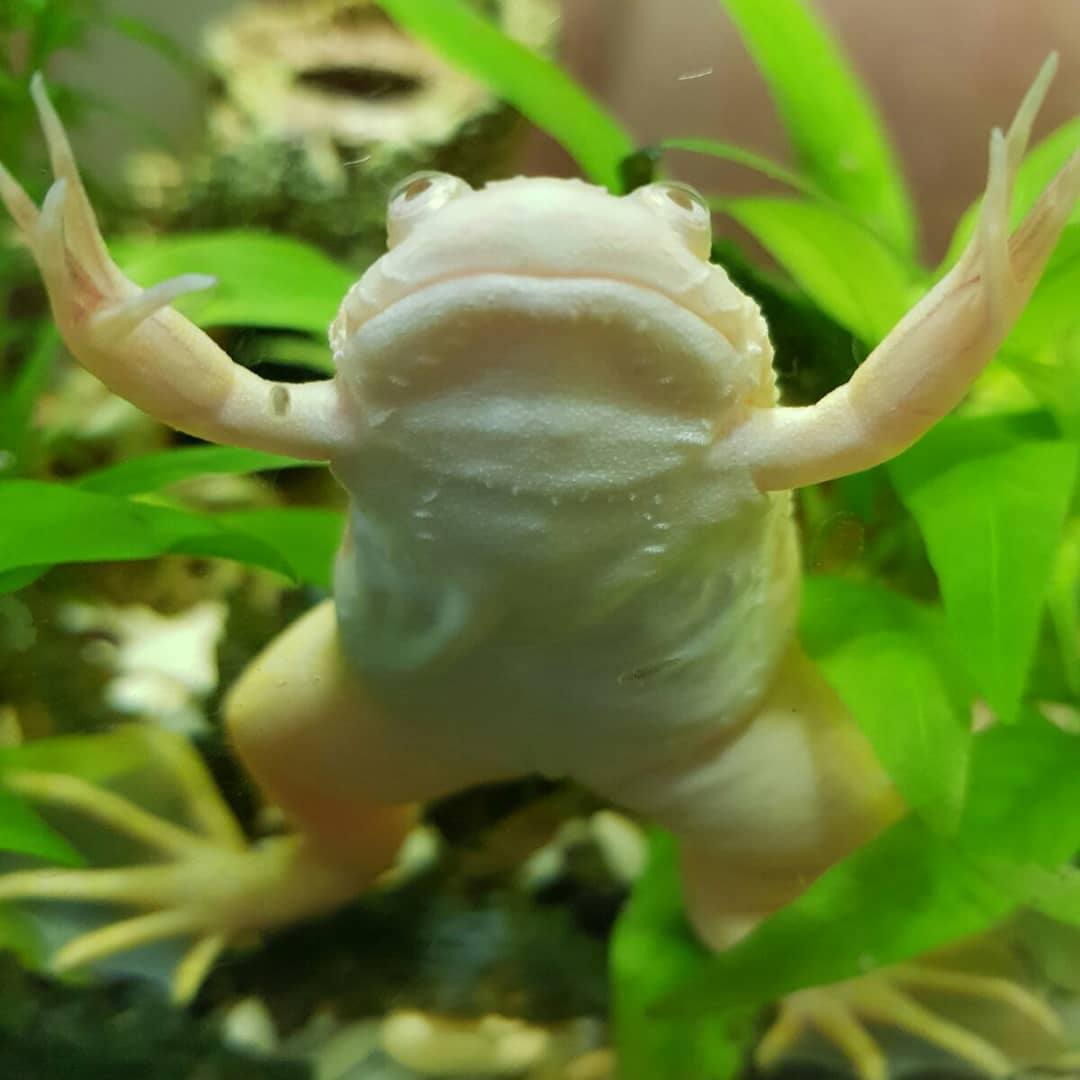
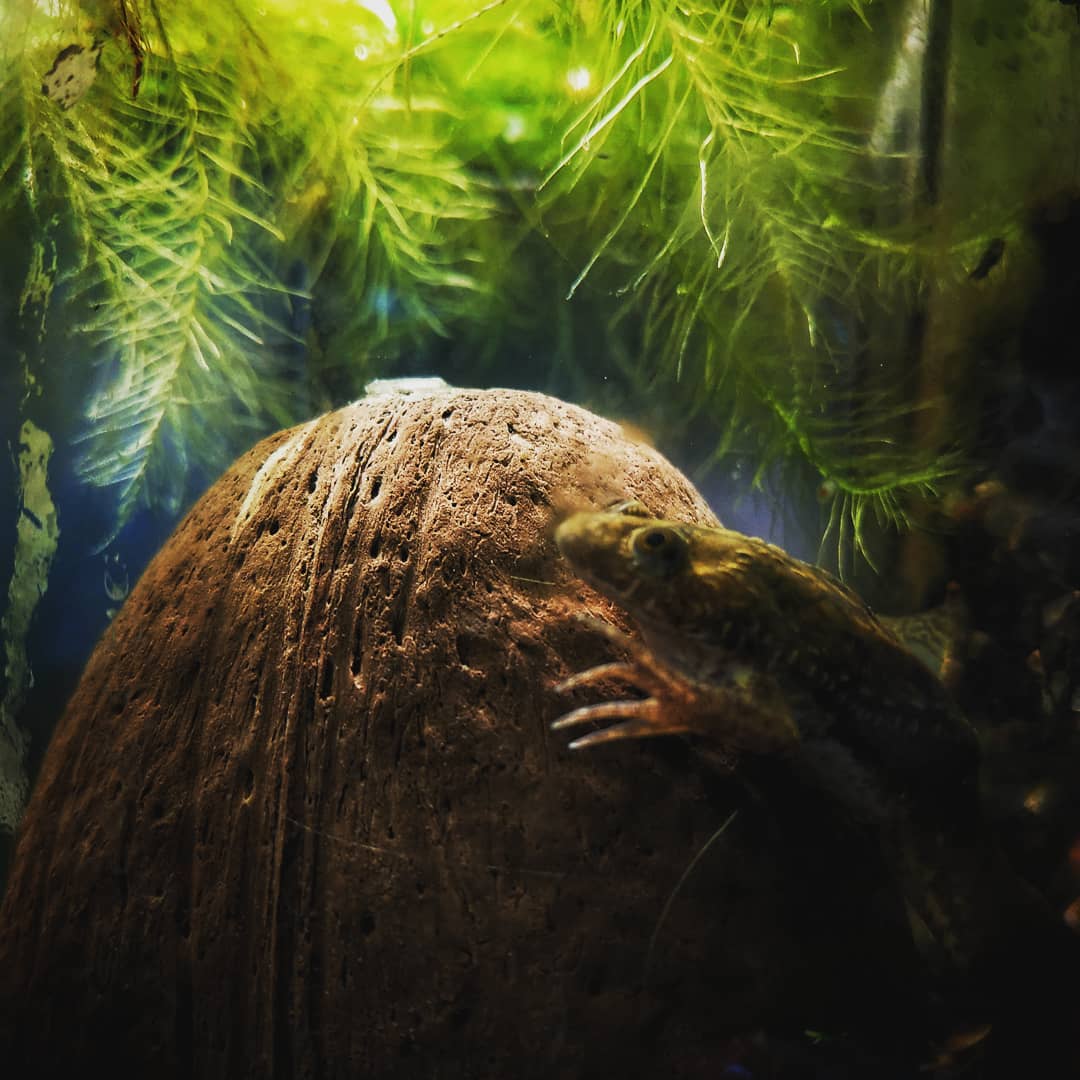
Sexual maturity in such animals occurs already in the first year, and all subsequent years they can give birth to offspring if they have a partner. At the same time, ornamental species obtained through selection work rarely live more than 8-10 years. Disease and improper care can shorten the lifespan of these creatures.
Species of amphibians
There are thousands of species of amphibians in nature, but not every toad or frog can be kept in an aquarium. No more than 15 species have adapted to life in artificial conditions and even reproduce in captivity.
At the same time, only the clawed frog, Hymenochirus and some others are recommended for keeping in home aquariums.
African Hymenochirus
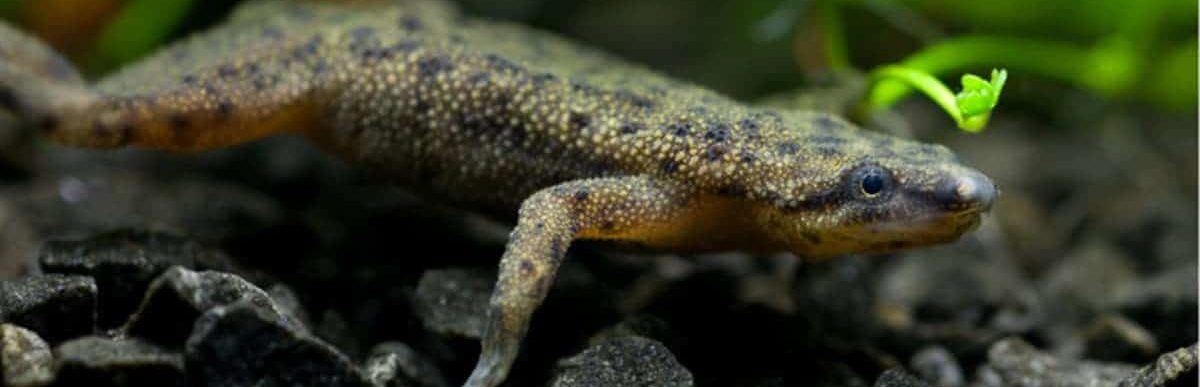
The African dwarf Hymenochirus boettgeri frog lives in swampy lakes and oxbow lakes where the water is very stagnant. When kept in captivity, the water in the aquaterrarium should be changed as rarely as possible.
These pets do not require additional aeration of the liquid. Thus, it is difficult to select fish that could live in such conditions and coexist with amphibians.
These are small creatures: their body length reaches 3-4, sometimes 6 cm. The animals have an elongated muzzle and long strong paws. There are translucent membranes between the fingers.
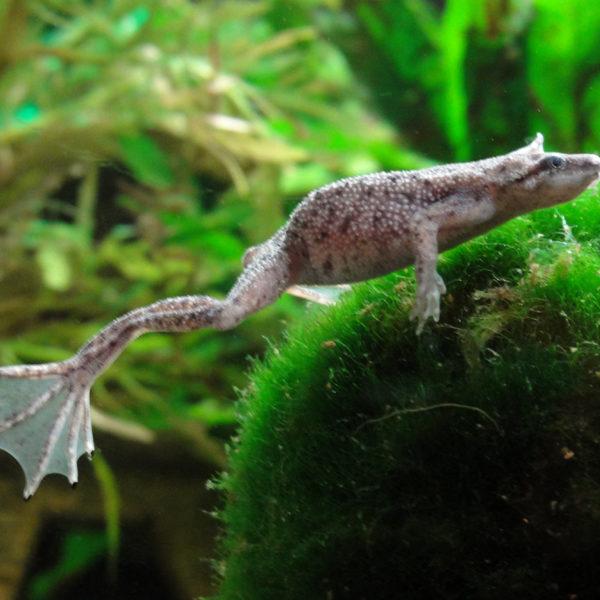
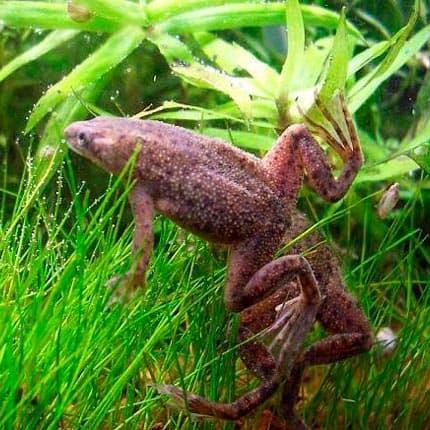
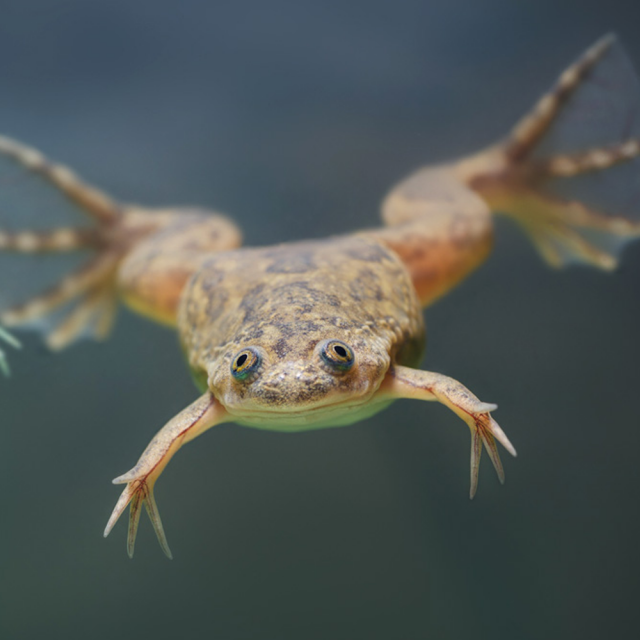
- Hymenochiruses often use their forelimbs to push food into the throat.
- Their skin is thin, with faint pimples. Its color can vary from marsh to burgundy.
- African frogs are not aggressive and lead a hidden lifestyle. They spend most of the day hiding in dense thickets of aquatic plants.
- It is advisable to equip them with several shaded places where amphibians could retire.
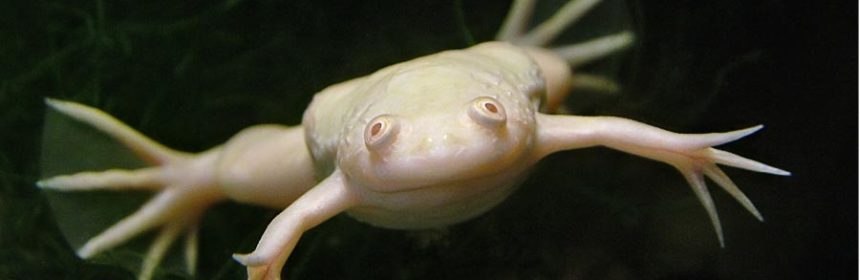
Xenopus (clawed frog)
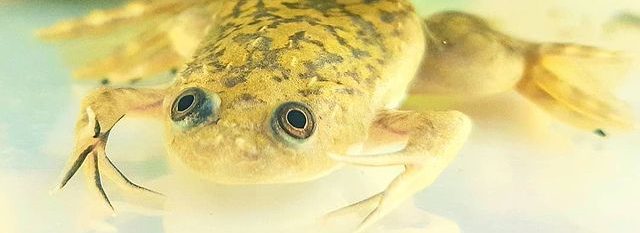
Xenopus was described in 1802 and has already become the most common domesticated species among amphibians. Individuals living in nature are distinguished by a marsh-brown skin color, but under artificial conditions varieties of yellow, white, light green and beige colors have been obtained.
- Claw frogs have a flat, short snout with large, bulging eyes, but they see almost nothing. Their upper eyelid has become a fold of skin. Xenopus rely more on their sense of smell.
- The body length of these amphibians reaches 8-10 cm. If favorable conditions are created for pets, they can grow up to 14 cm. The front legs are thin and small. At the same time, the hind pair of limbs is well developed.
There are transparent membranes between the long fingers. Frogs spend most of their lives underwater, periodically rising to the surface for a breath of air. These slippery creatures absorb large amounts of oxygen through the pores of their skin.
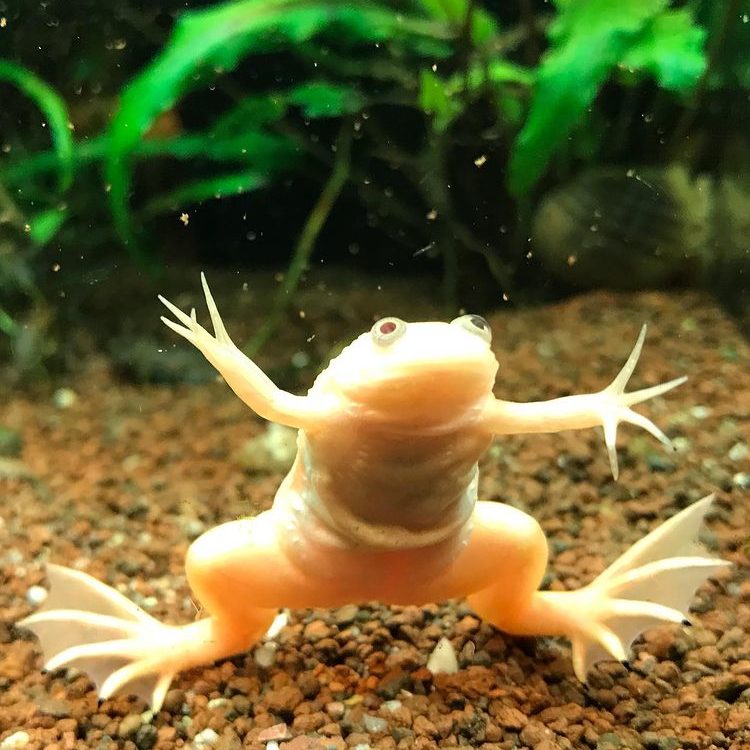
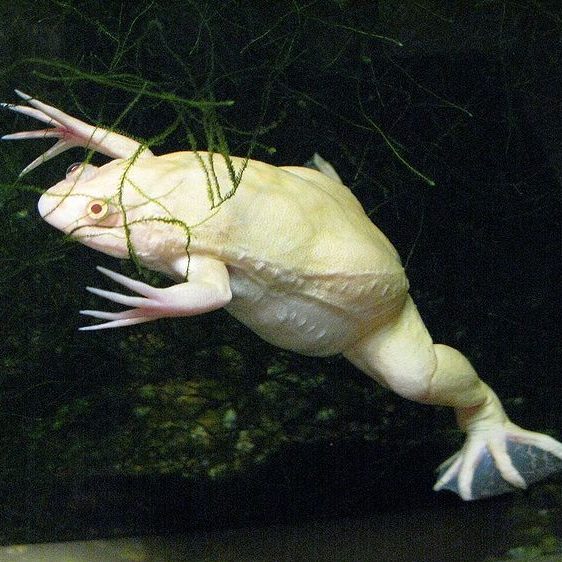
Xenopuses are omnivores, but they need to be fed in moderation, because… they are often obese. These large frogs are active in the aquarium, often digging up plant roots and moving stones. Clawed frogs are unclean and often muddy the water, since such conditions are most comfortable for them. Keeping with fish is conditional due to the fact that the frog is predatory.
Sex of the clawed frog

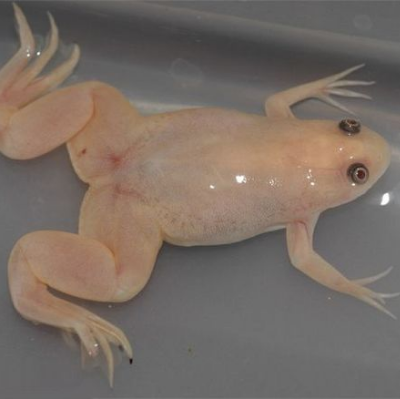
Frogs do not show sexual characteristics until they are nine months old. Females are usually larger than males and have a tail-like ovipositor and they do not make sounds. Males are smaller and thinner, there is no ovipositor and, unlike females, they sing (make sounds).
The clawed frog sings
Uki (bellied toads)

The most common fire-bellied toads found in home aquaterrariums are yellow-bellied and red-bellied. These creatures are brightly colored and poisonous. The toxic substance they produce is not dangerous to humans, but you must wash your hands after contact.
- The yellow-bellied water frog has a beige back with many dark stripes. The abdomen is yellow with black streaks.
- The red-bellied duck has a green back with black spots. The abdomen is red with a large number of large round spots, some of them merge. The body length of the animals reaches 7 cm. Toaded toads are able to remember the faces of their owners and approach the wall of the aquarium, waiting to receive food.
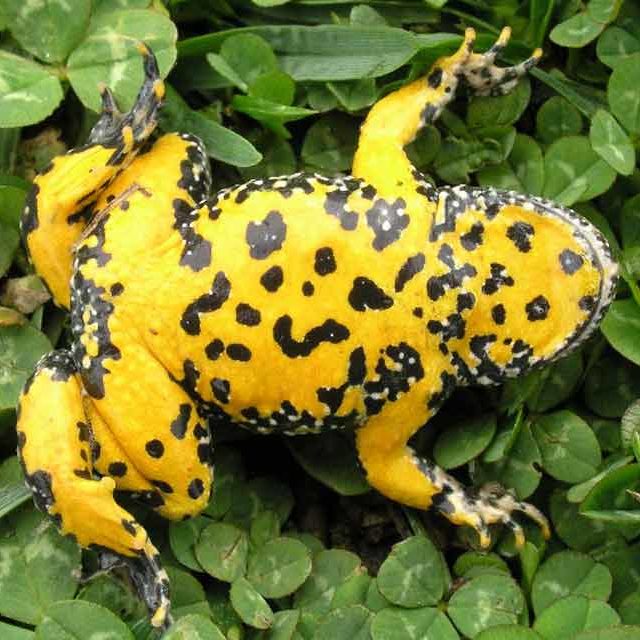
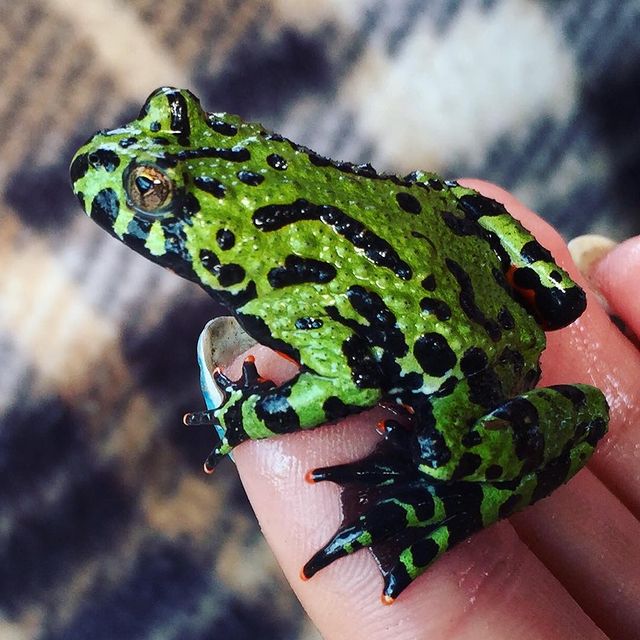
These creatures are undemanding to the cleanliness of their habitat. However, you can only add settled tap water to the container to reduce the chlorine content in it.
It is not recommended to keep toadstools with fish, because These amphibians are not clean, often muddy the water and undermine plants, which can lead to the death of other inhabitants of the artificially created environment.
Surinamese pipa
 The Suriname pipa is not a frog or a toad, but a separate species of amphibian.
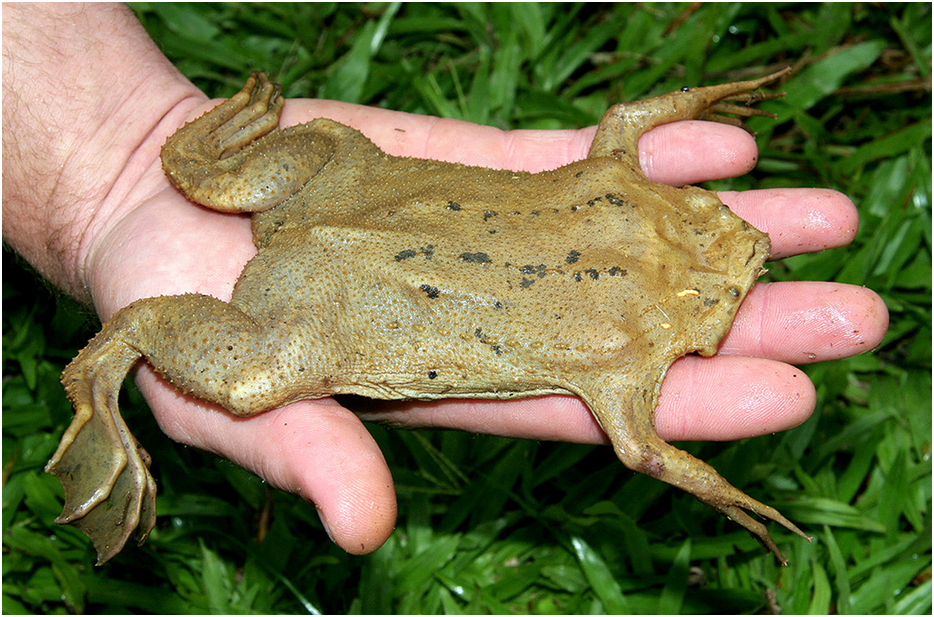
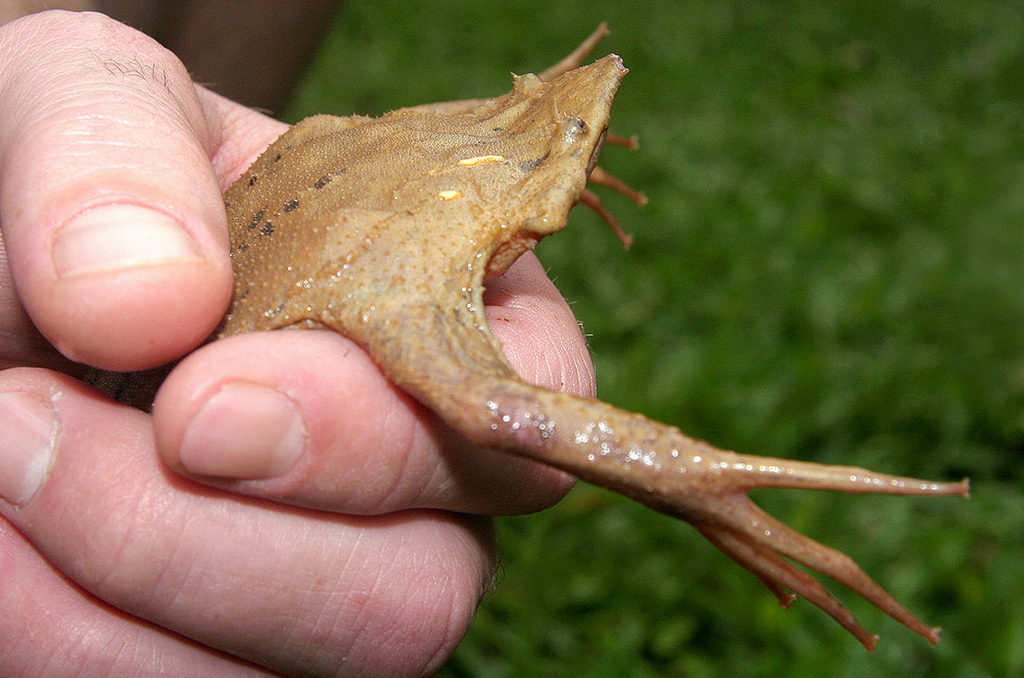
The peculiarity of these creatures is their strongly flattened shape. Their nose is pointed. The skin is rough and wrinkled.
Its color can be gray, pink, beige. The back is darker than the belly. There may be black spots on it.
Each front paw is crowned with four long toes. The hind legs have webs. Peeps lack tongue and teeth. Body length reaches 12 cm.
Reproduction of pips at home is very difficult.
They reach sexual maturity at 6 years of age. First, the couple dances a special dance underwater. This may take several days. Subsequently, the female, without leaving the aquatic environment, lays several eggs, and they are immediately enveloped in white sperm released by the male.
Then the next batch is released. The total number of eggs in a clutch can range from 40 to 144 pieces. The female presses the fertilized eggs to her back, distributing them into the existing cells.

Tadpoles feed on mucus secreted by the mother. Only after 12 weeks do formed small peeps appear from under the mother’s skin. In nature, these animals live in the murky waters of slow-flowing tributaries of the Amazon. When keeping them at home, they need to create similar conditions.
Compatibility of species with fish
The compatibility of water frogs with fish is extremely low. The following can be added to dwarf amphibian species:
When selecting even non-aggressive amphibians, you need to take into account that they tend to dig up soil and pollute the environment in other ways. This will negatively affect the health of the fish.
The living conditions and care required by these representatives of aquatic fauna are very different. In addition, fish eat frog eggs, which will make it difficult for amphibians to reproduce.
Home content
 To keep frogs, it is necessary to properly arrange the aquaterrarium.
Animals should be provided with the necessary care, given the fact that they are not among the cleanest and neatest.
Aquarium characteristics
To keep a couple of large amphibians, it is best to purchase an aquarium with a volume of more than 100 liters.
It is necessary to organize good filtration; strong aeration of the water is not required.
The aquarium contains a container of water with a volume of 5 to 20 liters. You can pour this amount of water to the bottom and install additional driftwood and wide pots with soil and planted plants.
Water quality
Amphibians have no special requirements for the chemical composition of water. However, it is recommended to leave the liquid for at least 3 days. After this, it can be poured into the aquarium.
It is advisable to maintain the temperature in the range of +22…+28 °C. Hardness and acidity levels are not important for frogs.
Soil and plants
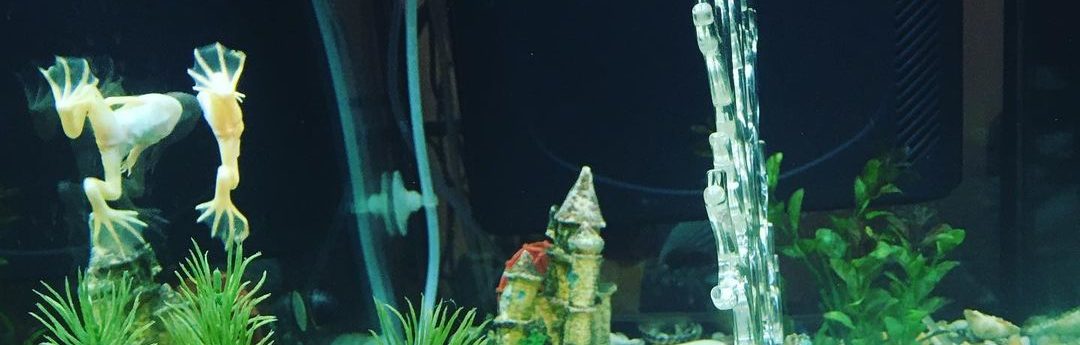
More often, when arranging a tank for frogs, river pebbles that do not have sharp edges are used. Peeps like fine gravel and silt. Toadstools love to dig, so they need gravel and sand.
The contents of the aquarium should be supplemented with hard-leaved aquatic plants: dense thickets will become a home for animals. It is better to plant bushes immediately in pots to avoid pets digging up the roots.
The following types of plants are suitable for arranging an aquaterrarium:
Equipment to maintain the necessary conditions
Frogs need additional lighting, so you will have to install ultraviolet lamps in the aquarium. To read the container you need to get a powerful siphon. In addition, you can install a filter, but it should not create too strong a current.
Protective cover
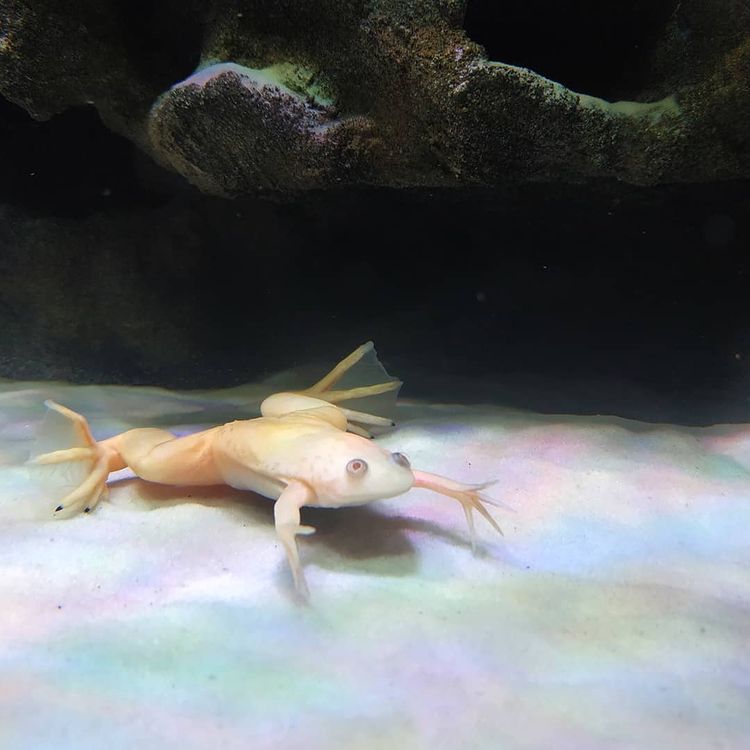 The tank must be equipped with a protective cover.
Frogs can jump long distances.
A long stay outside the aquatic environment is contraindicated for such pets: the animals will dry out and die.
A protective cover equipped with a large number of holes will not interfere with the flow of oxygen into the aquarium, but will not allow its inhabitants to jump out.
Feeding the frog
Only a few frogs consume ready-made amphibian food. Most individuals refuse it.
Amphibians can be fed:
- earthworms;
- crickets;
- bloodworm;
- fry.
Tobacco caterpillars can be given periodically. At the same time, it is not recommended to offer tubifex, pork and beef to your pets, because… these foods cause obesity in amphibians. Adults need to be fed 2-3 times a week.
Features of reproduction
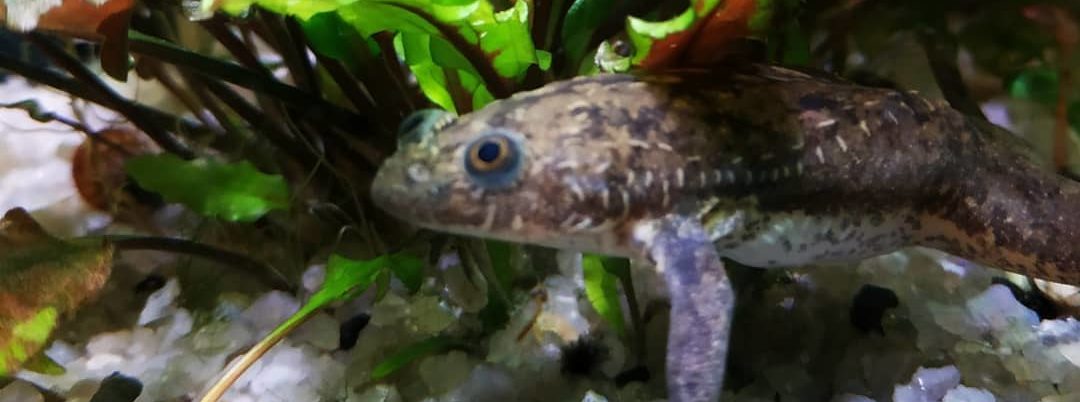
Reproduction of frogs can only be achieved by creating favorable conditions for them. These creatures produce offspring in captivity at approximately the same time as in nature.
To stimulate this process, you need to change the water 2-3 times a week, increasing its temperature slightly. The formation of a pair is often indicated by loud croaking and increased activity of the animals.
Determination of gender
 In most species of frogs, males are much smaller than females. This helps to quickly determine the gender of the pet.
Mating and caring for eggs
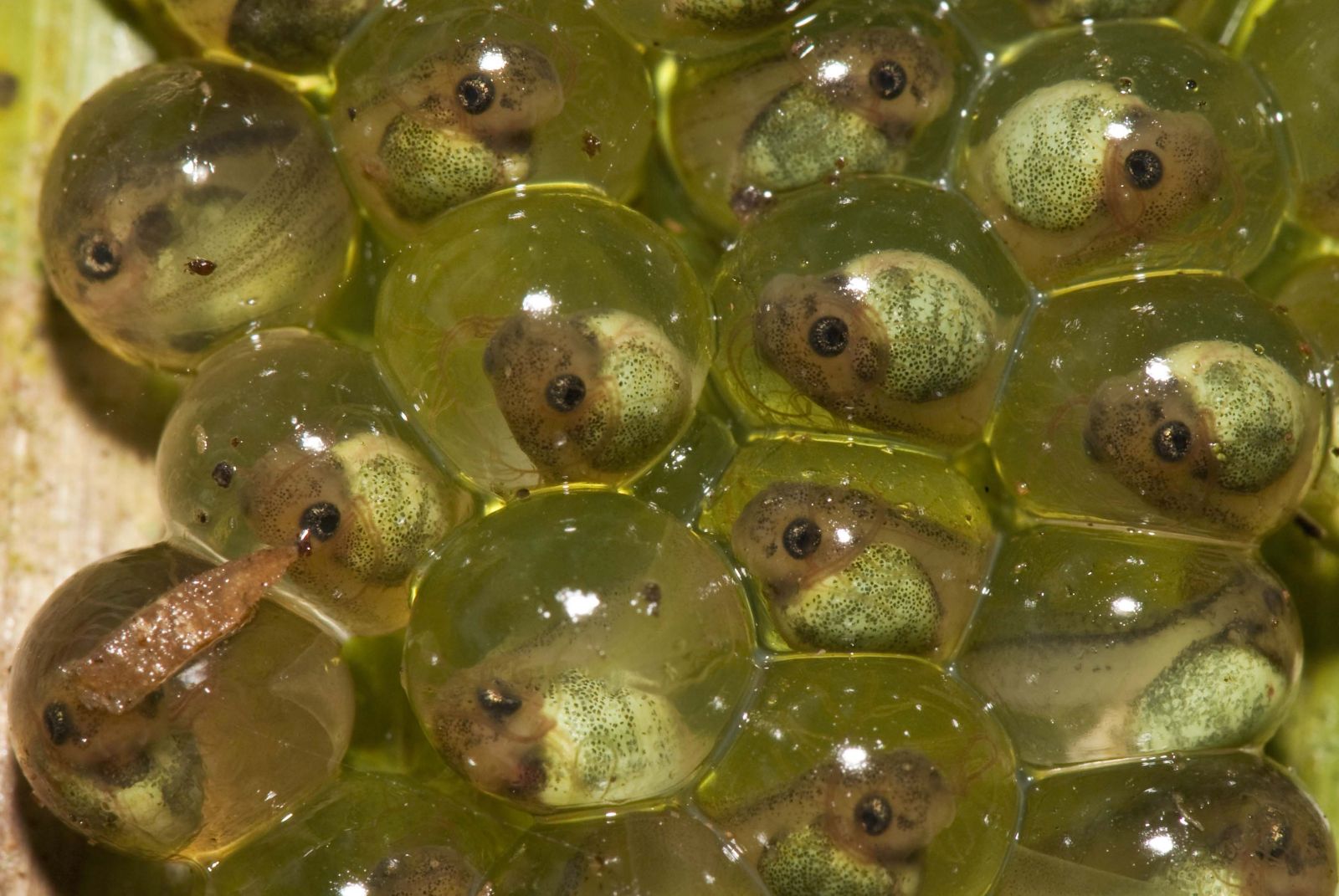
After mating, the female lays from 40 to 200 eggs. During the laying period, it is better to place the pair in a spawning area. Upon completion of the process, adults are returned to the general aquarium.
Caviar must be protected from temperature changes. The duration of the ripening process depends on the type of frog.
Feeding tadpoles
Most often, tadpoles are fed with ciliates and rotifers. Young animals should be given food 1-2 times a day.
Common diseases and their treatment
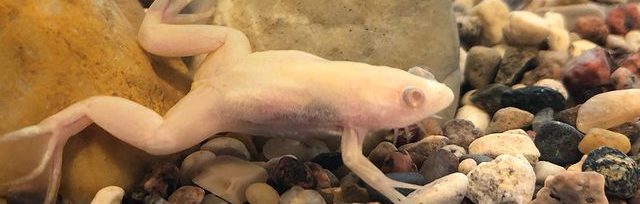
Frogs living at home suffer from a number of fungal, bacterial and parasitic diseases. Pets are often diagnosed with nematode infestation.
In this case, the animal’s skin turns gray and begins to peel off. Scraping under a microscope can easily reveal the worms. To eliminate pathology, it is necessary to thoroughly clean and disinfect the aquarium and all equipment. The frogs are given antihelminthic drugs.
Injury to thin skin can cause fungal infections in animals. Not many antifungal drugs are used to treat amphibians. Often the frog recovers or dies on its own.
Another common disease in frogs is dropsy. It is caused by a bacterial infection. The disease causes the frog to become very bloated. Without targeted antibacterial therapy, the pet quickly dies.
Previous


Spelling error report
The following text will be sent to our editors: