How to Keep Jellyfish in an Aquarium
Contents
At home, jellyfish are rarely found in an aquarium, since their maintenance is expensive and requires effort. Coelenterates are most often bred in aquariums, but some people want to purchase them for their aquarium. Subject to a number of rules, the owners have the opportunity to constantly admire the graceful sea inhabitants.
What species are suitable for keeping in an aquarium?
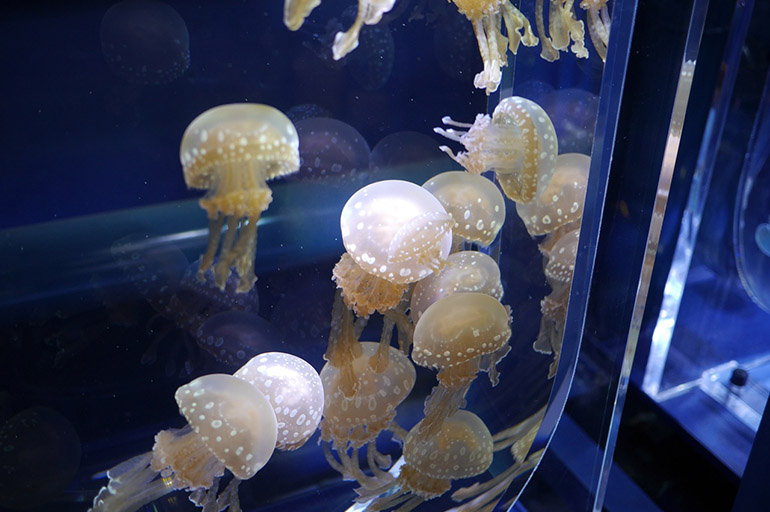
Jellyfish are either marine or freshwater. The latter are represented by only one species – Craspedacusta sowerbyi. The following types of sea jellyfish are suitable for self-breeding:
- Amakuza. The invertebrate grows up to 10 cm in length. Has long stinging tentacles. Its diet consists of plankton and small jellyfish.
- Aurelia. In nature they can grow up to 30 cm in diameter, but at home individuals are smaller. Painted in purple and lilac shades. They do not need bright lighting; they prefer twilight, in which uncontrolled algae growth does not occur.
- Cassiopeia Mangrove. The transparent body is green or purple. It can rise to the surface of the reservoir to warm itself. Requires a liquid temperature of +23…+25°C. Individuals are poisonous, so care should be taken when caring for them.
- Papuan. Prefers slightly salted water. The dome increases to 50-60 cm in diameter. Feeds on plankton and zooxanthellae.
- Ropilema. In nature, individuals grow to a meter in size, but in an aquarium the jellyfish will not become so large. These red-colored underwater inhabitants eat smaller coelenterates, so they are kept separately from other species.
- Sowerby. This milky freshwater species feeds on crustaceans. Prefers warm water with a weak current. Below you can watch a video about this species.
Features of invertebrates
Jellyfish do not have a brain, spinal cord, intestines, kidneys, stomach, or visual organs. The digestive system is represented by a pouch. Their closest relatives are corals and sea anemones.
Jellyfish are predators. Through stinging cells located at the ends of the tentacles, they release venom upon contact with prey. The substance paralyzes the victim: plankton, small crustaceans. Large specimens are capable of killing fish; the poison of some is dangerous to humans.
Difficulties in maintenance arise due to the inability to touch the tentacles. When the owner plunges his hand into an aquarium with coelenterates, they begin to defend themselves. After touching the tentacles, a mark in the form of a burn remains on the skin. If a person experiences nausea, dizziness, or worsening symptoms, it is necessary to consult a doctor as soon as possible.
Transportation of jellyfish to the place of detention
To transport invertebrates to their future owner, tanks with smooth corners will be required. If it is impossible to purchase these, you can replace them with thick plastic bags. There should be no air left in the container. Jellyfish must not be removed from the liquid even after transportation has been completed.
Conditions in the aquarium
In order for underwater inhabitants to take root, a number of rules must be followed.
Some owners clean their aquariums by introducing cleaning bacteria. This option has a number of disadvantages: microorganisms consume nutrients intended for jellyfish and release oxygen. Air bubbles trapped under the dome can damage it.
Capacity requirements
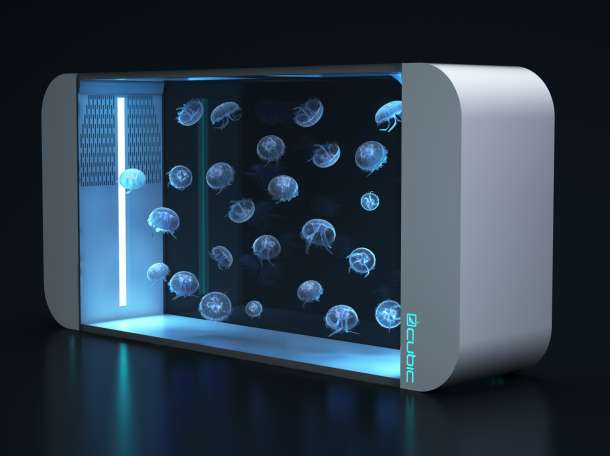
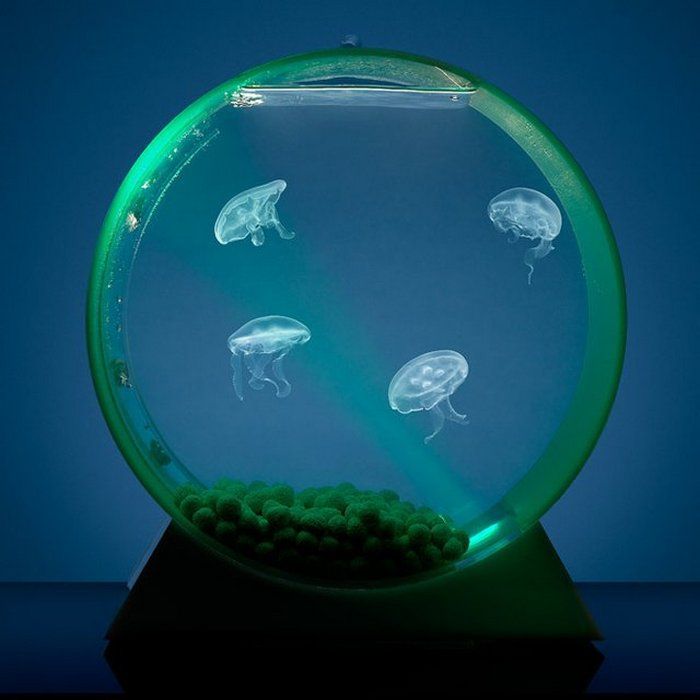
For coelenterates, it is recommended to purchase a carousel aquarium. Water currents move in it, which allows the jellyfish to stay afloat. Square or rectangular containers are not suitable, since their delicate bodies will be injured by the corners, which will lead to the death of invertebrates.
To avoid this, buy a product with rounded walls. You can purchase a cylindrical container.
Choose the right filters. Devices that are too powerful will draw in the jellyfish itself, which will lead to damage to the dome and subsequent death.
For 2 individuals you will need a tank holding at least 40 liters of water.
Water parameters
The fluid must be renewed periodically. Coelenterates are sensitive to pollution and can only live in fresh, clean water. The temperature should be +26…+28°C. For freshwater species, acidity should be neutral pH-7, hardness should range from soft to medium 5-15 GH.
For marine species:
- Acidity – pH 7.6-7.8
- Density – 1.020-1.025.
- Carbonate hardness – 12-18 dKH
Filling the aquarium
For jellyfish, a soil made of fine or medium gravel or pebbles with smooth edges is suitable. It is allowed to add glass balls for decoration. An abundance of vegetation is not required. Do not place more than 2 bushes in an aquarium. It is impossible for the algae to grow too much, because in such a situation the jellyfish will have nowhere to swim.
Feeding and diet
Every jellyfish, including representatives of freshwater species, is a predator. They hunt live prey: small crustaceans, cyclops, zooplankton. Feed will have to be added to the tank in small quantities daily. Dried crustaceans will not work. It is allowed to periodically add shrimp to the diet. You can’t give fish.
Reproduction in captivity
Most often, invertebrates reproduce asexually. The adult produces a larva called a planula. Its shape and size are similar to a slipper ciliate. The larva settles to the bottom, where it attaches to a stone or algae. A polyp is formed from the planula, which gradually grows and turns into a colony. Polyps are hardy and easily adapt to changing environmental conditions. In this form, the jellyfish is able to tolerate temperatures below 25°C for several years.
The polyp will turn into an adult only under favorable conditions. Because of this, a sharp increase in the population of jellyfish is periodically observed, even in those reservoirs where they did not live before.
At home, the main difficulty is the need for a constant supply of fresh food. The adult is capable of moving around to hunt. A polyp attached to a permanent location also feeds on zooplankton. The concentration of small crustaceans must be high so that invertebrates can feed, grow, and develop. If the aquarist can provide periodic feeding, it will be possible to reproduce the life cycle of a jellyfish at home.
If polyps appear, move them to a separate tank. Leave them there until they turn into jellyfish, then move them to the aquarium with their parents.
https://youtu.be/3FsJVW25kHo
Additional information
You can feed your pets organic food dissolved in liquid. Coelenterates will capture food with their entire body.
Difficulties may arise when purchasing invertebrates. It is better to purchase them through special aquarium forums. It is easier to buy freshwater jellyfish in Moscow and St. Petersburg. Due to difficulties with delivery, residents of the regions will have to overpay.
Installation of an aerator is prohibited. Oxygen bubbles that appear due to the operation of the device lead to damage to the dome and death of individuals.
It is impossible to keep jellyfish together with other underwater inhabitants at home. Fish and crustaceans will die from touching the tips of the tentacles of coelenterates. You will have to start a separate aquarium.
Lighting is selected depending on the type of jellyfish. Some prefer bright lighting, others are more active in dim light.
Next

Spelling error report
The following text will be sent to our editors: